
The Path of a Thai Fighter: From poor villages to the big stadiums
When people watch a Muay Thai fight under the bright lights of Lumpinee or Rajadamnern Stadium, they see explosive kicks, sharp elbows, and warriors who seem to figure it all out. What they often don’t see is the journey that brought these fighters there – a path that usually begins in the quiet villages of Thailand.
Muay Thai is not just a sport in Thailand. For thousands of young boys – and now more and more girls – it is a chance to fight for something greater: food on the table, education for their siblings, retirement for their parents and the hope of a better life.
The Early Struggles
In rural Thailand, especially in regions like Isaan in the northeast, poverty is an everyday reality. Families work long hours in rice fields or on construction sites, often earning just enough to survive. For a young boy, the daily routine might mean waking up before sunrise to help his parents before school – carrying water, feeding animals, planting rice or selling food at a nearby market.
Meals are simple. A bowl of sticky rice with a bit of fish or vegetables might be all that’s available. New shoes or school supplies can feel like luxuries. It’s in these conditions that many children discover Muay Thai, not as a hobby, but as a path that could change their lives.
First steps into Muay Thai
Most fighters are introduced to the sport at a very young age, often around seven or eight. Sometimes it happens through a family member, sometimes through a village trainer or temple festival. A local kru (teacher) might spot the boy’s determination and invite him to train. Training starts with the basics: running barefoot down dirt roads, endless push-ups, and practicing kicks against the heavy bag – or sometimes banana trees – until the shins toughen up.
Soon, the boy is ready for his first fight. It usually takes place at a temple fair or local festival, with makeshift rings set up in the open air. The crowd is made up of villagers, gamblers, and families cheering loudly. The fight might last just a few rounds, and the prize money could be as little as 100 baht – barely enough for a sack of rice. Yet, for the family, every win matters.
Fighting for Survival
As the boy grows, so do the challenges. By the age of twelve or thirteen, he may have already fought dozens of times. Each fight is not just about pride but about survival. Victories mean extra income. Losses mean going back home with less. For many families, the son’s fights are a vital part of the household’s finances.
This responsibility builds discipline fast. While children elsewhere spend afternoons playing games, young fighters spend theirs running, kicking pads and sparring. Pain, exhaustion, and sacrifice become normal parts of life.
Moving to a Big Camp
When a boy shows promise, larger gyms in cities like Chiang Mai, Phuket or Bangkok take notice. This is often a turning point. Families, sometimes reluctantly, send their son to live in a Muay Thai camp. The camp becomes both home and school. Fighters live in shared rooms, sleep on thin mattresses, and wake up before dawn for training.
Daily life in the camp is relentless. The training starts early with a run. Arriving back to the gym the trainers sharpen the young boys and prepare them for fights. In the afternoon they do it all over again. The main dish is rice with chicken, eggs and vegetables. For the boy, the gym provides something his family could not always guarantee: stability, food, and a clear path forward.
Climbing the Ladder
By his teenage years, the boy might be fighting at provincial stadiums, earning larger purses and building a reputation. Promoters watch closely, eager to find the next star. With each win, his name spreads. With each loss, he learns hard lessons about resilience and humility.
The journey is not glamorous. Injuries are frequent and the pressure is immense. Yet, every fight brings him closer to the dream: competing at the most prestigious stadiums in Bangkok.
Under the Stadium Lights
For a young fighter, stepping into Lumpinee or Rajadamnern Stadium for the first time is unforgettable. The atmosphere is electric. The sound of the crowd shouting and the bright floodlights all create a sense of destiny. This is where legends are made.
A win in one of these stadiums brings honor not only to the fighter but to his family and his village. Suddenly, the boy who once ran barefoot on dirt roads is being recognized as a warrior representing the heart of Muay Thai.
Beyond Survival: A Career in Muay Thai
Not every fighter makes it to the top, but those who do can transform their lives. Some go on to fight internationally, traveling to Japan, Europe or the United States, where purses are higher. Others transition into roles as trainers, teaching both Thais and foreigners who come to Thailand to experience authentic Muay Thai.
For many, Muay Thai provides what seemed impossible in childhood: financial security, respect and a chance to support their families.
The Human Side of Muay Thai
It’s easy to watch Muay Thai as an outsider and admire the skill, the toughness, and the excitement. But behind every fight is a deeply human story. For a young boy growing up poor, Muay Thai is not just about sport. It’s about survival, sacrifice and the hope of a better tomorrow. It means everything to them.
This is why the sport carries such weight in Thai culture. It’s more than entertainment. It’s a lifeline.
What this means for Foreign Fighters
For those coming to Thailand to train, understanding this background adds depth to the experience. Every time you step into the ring, you’re sharing space with people who have lived this story. Every clinch, every strike, every wai kru dance is tied to generations of struggle and tradition.
The path of a Thai fighter is a journey from hardship to hope, from dusty village to stadium lights. It’s a story of resilience, sacrifice and an unshakable will to rise above. For a young boy growing up poor, Muay Thai is not just a dream – it’s a way to survive, to give back and to build a better future.
And for anyone who comes to Thailand to train, knowing this history makes every drop of sweat mean something more.
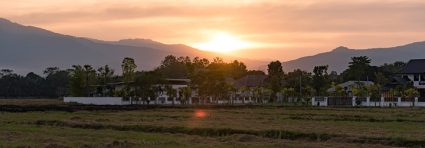
Want to experience real Muay Thai in northern Thailand? We are surrounded by mountains and rice fields, located in Chiang Mai. Click here for more Info on our Muay Thai packages.
Thank you for your interest in Thai Boxing.
– Team Bangarang