

Understanding Muay Thai Rules and Scoring (with Referee Insights from Coach Tommy) 🧠
Muay Thai is called the “Art of the 8 limbs” because fighters can use punches, kicks, knees, and elbows. But behind the beauty and chaos in the ring, Muay Thai is also highly structured with strict rules and a unique scoring system that sets it apart from (kick)boxing or MMA.
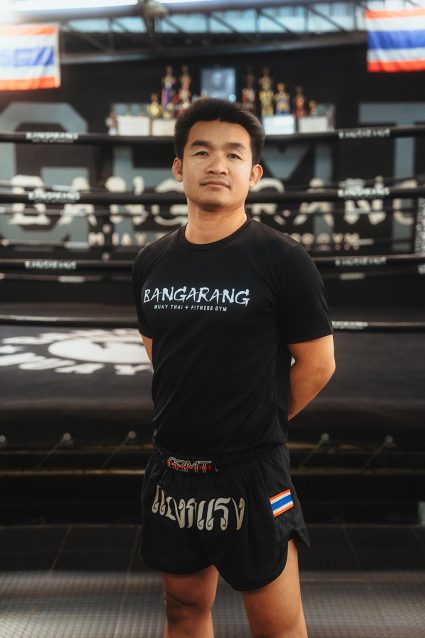
At Gym Bangarang in Chiang Mai, one of our coaches Tommy, brings a special perspective. Not only is he a fighter, champion and trainer but he also works as a referee and judge in professional Muay Thai bouts. His experience helps fighters and students understand what really matters when they step into the ring.
In this guide, we’ll break down the official rules, what referees look for and how scoring works in Muay Thai.

The Basics of Muay Thai Rules 📜
Before understanding scoring, you need to know the ground rules every fighter follows:
1. Rounds & Time
- Professional Muay Thai bouts are five rounds of three minutes each with 1-2 minute breaks between rounds.
2. Legal strikes
- Punches, Kicks, Knees, Elbows – no Headbutts
3. Clinch Fighting
- Muay Thai allows prolonged clinching, where fighters battle for dominant position to land knees and elbows.
- Unlike in boxing, clinch work is a major scoring area.
4. Illegal Moves
- Headbutts, groin strikes, biting, hair pulling, and strikes to the back of the head are forbidden.
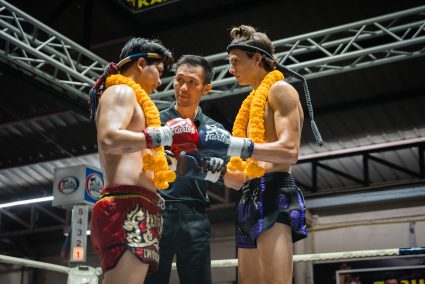
- Throwing an opponent with hip or shoulder throws (like in Judo) is not allowed, but off-balancing sweeps using the legs are legal.
How Muay Thai Scoring works 🎯
Here’s where many newcomers get confused. A flashy spinning kick might excite the crowd, but it won’t always win you the fight if it doesn’t land properly. Scoring in Muay Thai is based on effectiveness and damage, not volume.
✅ Key Scoring Criteria:
- Effective Strikes
- Clean, controlled techniques that visibly impact the opponent score highest.
- A solid body kick that lands with power and balance scores more than a light flurry of punches. Kicks score higher in general than fists.
- Balance and Control
- Fighters must show balance after striking. If you land a kick but stumble, the score is reduced.
- Sweeping an opponent off their feet results in a very high score.
- Clinch and Knee Work
- Knees in the clinch are one of the most respected scoring techniques.
- Controlling the clinch position while landing knees shows skill and dominance.
- Elbows
- Elbows are dangerous weapons. If they cut or stun an opponent, they heavily influence scoring.
- Ring Generalship
- Judges reward fighters who control the pace, move forward with purpose and dictate the action.
- Damage
- A visibly hurt opponent (wobbled, body language showing pain, cut from an elbow) is a sign of effective scoring.
The 10-Point Must System (Thai Style) 📊
Like boxing, Muay Thai uses the 10-point must system:
- The round winner gets 10 points.
- The opponent gets 9 or less, depending on how clear the round was.
But unlike boxing, not all rounds are valued equally in practice. In Thailand, round 1 and 2 are often slower, serving as a feeling-out process. Judges put more weight on rounds 3, 4, and 5 – especially round 3 and 4, where the real battle happens.
- Round 1-2: Fighters establish rhythm, little scoring impact unless there’s a knockdown.
- Round 3-4: Decisive rounds. Judges closely evaluate clean strikes, dominance and damage.
- Round 5: Often strategic – if a fighter is clearly ahead, they may defend and avoid risks.
Referee’s Perspective: Insights from Coach Tommy 🧑⚖️
Kru Tommy, who often referees fights across Chiang Mai and Northern Thailand, explains it like this:
On Kicks vs. Punches:
“In Muay Thai, a hard body kick that lands clean scores much higher than three or four punches to the head. Western fighters sometimes forget this. Punches can score, but kicks and knees carry more weight.”
On Balance:
“If you land a strike but fall or get countered immediately, the score goes to your opponent. Staying balanced shows control, judges watch for this every second.”
On Clinching:
“Beginners think clinch is just holding, but it’s one of the most technical parts of Muay Thai. A fighter who controls the clinch and lands knees will win on the scorecards.”
On Strategy in Later Rounds:
“In round 5, if you’re winning, you don’t need to take risks. Fighters will show confidence, sometimes even raise their hands. The other fighter must attack with urgency. Judges understand this psychology – it’s part of Muay Thai culture.”
So for example if Fighter A lands three strong body kicks with balance, while Fighter B lands five punches and one leg kick. → Fighter A wins the round.
Also if Fighter A knocks down Fighter B with a clean elbow. → That’s an automatic 10–8 round, except Fighter B knocks down Fighter A in the same round, then it’s equal.
Why understanding the Rules matters 🧠
For casual fans, Muay Thai may look chaotic but for fighters, knowing the rules and scoring system is crucial. Many foreigners lose fights in Thailand because they focus on western boxing-style volume instead of Thai scoring priorities.
At Gym Bangarang, fighters benefit from learning directly from someone like Coach Tommy, who judges these fights himself. His feedback helps fighters to adjust their style for real success in the local Muay Thai stadiums.
What you’ve learned today ✅
Today we learned that Muay Thai is more than aggression – it’s about control, balance, and effectiveness. Every strike, every clinch, every movement in the ring tells the judges a story. Understanding these rules helps fighters train smarter and fans appreciate the art behind the sport.
If you want to not only train but also learn how to fight, we at Gym Bangarang in Chiang Mai offer a unique perspective. With coaches like Tommy – referee, judge and trainer – you’ll be well prepared for a step into the ring.
Want to visit us, train with Coach Tommy and other world-class trainers? Join our Muay Thai Camp at Gym Bangarang in Chiang Mai!