

Training Muay Thai without Fighting – Is it still worth it?
Walk into almost any Muay Thai gym in Thailand and you’ll feel it immediately. Thai fighters and foreigners from all around the world kicking the bad and preparing for their next fights in the prestigious stadiums of Samui, Phuket, Chiang Mai, Hua Hin or Bangkok. In the background, there’s always the unspoken question:
“If I’m not fighting… do I really belong here?”
It’s a question many people never say out loud. Digital nomads. Women training alone. People in their late 20s, 30s, 40s or even 50s. Athletes who love the art but don’t feel drawn to the ring. And it often leads to the same doubt: is Muay Thai still worth training if you never plan to fight?
The short answer is yes.
The longer answer is more interesting.
Where the “Fighting only” Idea comes from
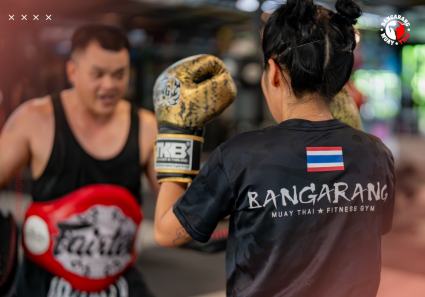
Muay Thai has deep roots as a fighting sport. For many Thai fighters, the ring isn’t a goal – it’s survival. Fighting paid school fees, supported families, put food on the table. That history still shapes the culture today, especially in traditional gyms.
So when foreigners arrive in Thailand, it’s easy to assume there’s a single “correct” path: train hard, fight, move up, repeat. Social media reinforces this idea. Highlights show belts, knockouts and stadium lights. What you don’t see are the hundreds of people training every day who never step through the ropes – and are quietly getting exactly what they came for.
What most Travelers are actually looking for
If you listen closely, most non-fighters aren’t avoiding the ring out of fear. They’re choosing something else.
Some want structure. A reason to wake up early and move their body with purpose. Others want confidence, the calm feeling of knowing what you’re capable of. Many come because Muay Thai gives them something modern life doesn’t: presence. You can’t check emails while being in the gym. You can’t overthink when you’re kicking pads.
For remote workers and long-term travelers, Muay Thai often becomes the anchor of the day. Training creates routine in a place where days can easily blur together. Morning sessions shape the schedule. Recovery forces rest. Meals start to matter. Sleep becomes non-negotiable.
None of that requires a fight.
Physical Progress without the Pressure
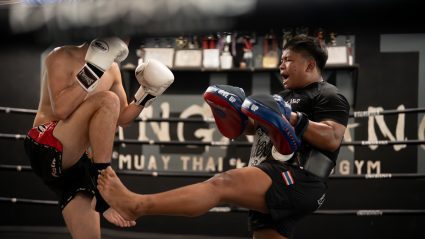
One of the biggest misconceptions is that real improvement only comes with competition. In reality, many people progress faster without the stress of preparing for a fight.
Without a deadline, training becomes more sustainable. You learn technique without rushing. You build conditioning without pushing through injuries. You can focus on balance, footwork, timing – the parts that often get neglected when weight cuts and sparring intensity take over.
In Thailand, especially in places like Chiang Mai, trainers are used to working with nomads and people at all levels. Pads aren’t just for fighters. Clinch isn’t reserved for competitors. A good trainer adjusts naturally, giving you exactly what you need.
Long-term improvement is the result. Strong legs. Better posture. Sharper coordination. Less stress from work. A body that feels capable instead of constantly on edge.
The Mental Shift that happens anyway
Even without fighting, something changes after weeks or months of consistent training.
You get comfortable being uncomfortable. Small frustrations like a missed kick or a sloppy round stop triggering emotional reactions. You learn to breathe and reset your mind.
That carries into daily life more than most people expect.
Stress doesn’t spike as fast. Things are getting done easier. You don’t need to prove toughness because you experience it every day in small, repeatable ways.
Many long-term trainees say the biggest benefit of Muay Thai wasn’t physical at all. It was learning patience and to calm down your mind.
Muay Thai Gym Culture: You belong more than you think
Another fear non-fighters have is sticking out. Being “the tourist”. Being judged.
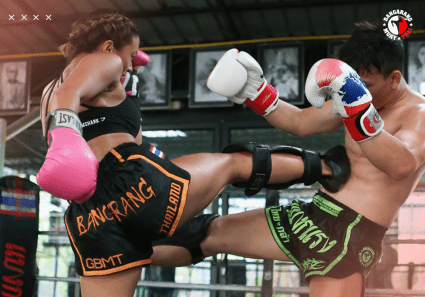
Trainers notice who shows up consistently, who listens, who respects the space. They don’t care if you’re chasing a belt or just trying to get a great workout in.
In fact, many Thai trainers prefer working with people who train for the sake of training. There’s less ego, less urgency. Sessions become smooth and fun with both having no pressure.
At gyms outside the party-heavy areas – especially in quieter places like Mae Rim – training culture tends to be calmer. People can have a chat between rounds. Progress isn’t rushed and you’re allowed to exist without constantly explaining your goals.
Muay Thai as a Lifestyle, not a Ladder
When fighting is removed from the equation, Muay Thai shifts from being “a ladder to climb” into a healthy routine.
You train because it feels good to train. Because your mind works better when you do. Because the discipline carries over into food, sleep and how you move through the day.
This is why many people end up training longer than they ever planned. One month becomes 3. Three becomes six, because life feels more balanced with training in it.
And interestingly, some people who never planned to fight eventually do – not because of pressure, but out of curiosity. Others train for years and never step into the ring, completely content with that choice.
Both paths are normal and accepted through Thailand.
Why Thailand is still the best Place to do it
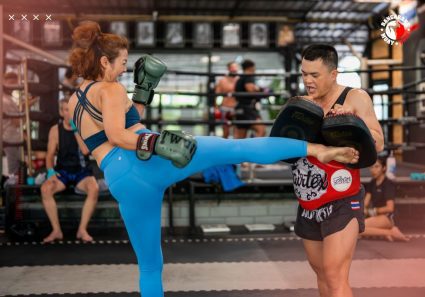
Training Muay Thai casually outside Thailand is possible, but something is lost. Here, the sport is part of daily life. It’s culture. Travelers come for weight-loss, casual training and fun. Doing it with authentic Muay Thai Trainers, who grew up with it, is an experience that is found nowhere else.
In Chiang Mai, this is amplified by the slower pace of life. You train, eat, recover and repeat. No rush. No noise. Just enough structure to support consistency. Gyms like Gym Bangarang attract many people who train seriously without chasing fights. The environment allows for progress without pressure.
So, is it still worth it?
If you measure it by how your body feels after a month or two. By how your mind handles stress. By how consistent you become with yourself – then yes, absolutely.
Muay Thai doesn’t require a fight to change you. Showing up is enough. Repeating the work is enough. Letting the process shape you, quietly, day by day, is enough.
For many people, that’s the whole point.
Start your adventure with Gym Bangarang in Chiang Mai, Mae Rim. There’s accommodation villas, a gym-area with all the weights you need, clean Muay Thai mats, a swimming pool to recover and daily healthy meals to fuel your body for training.